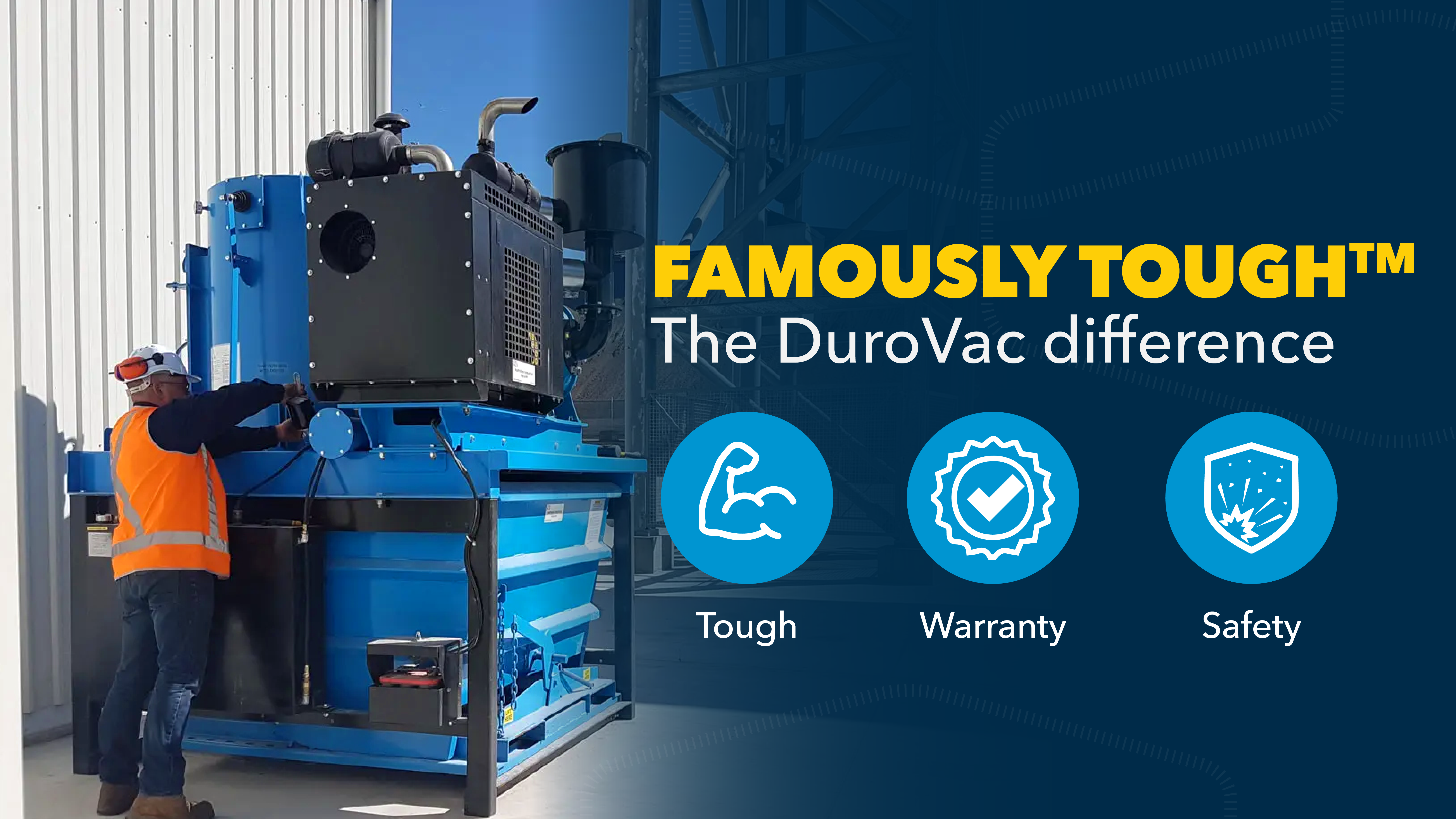
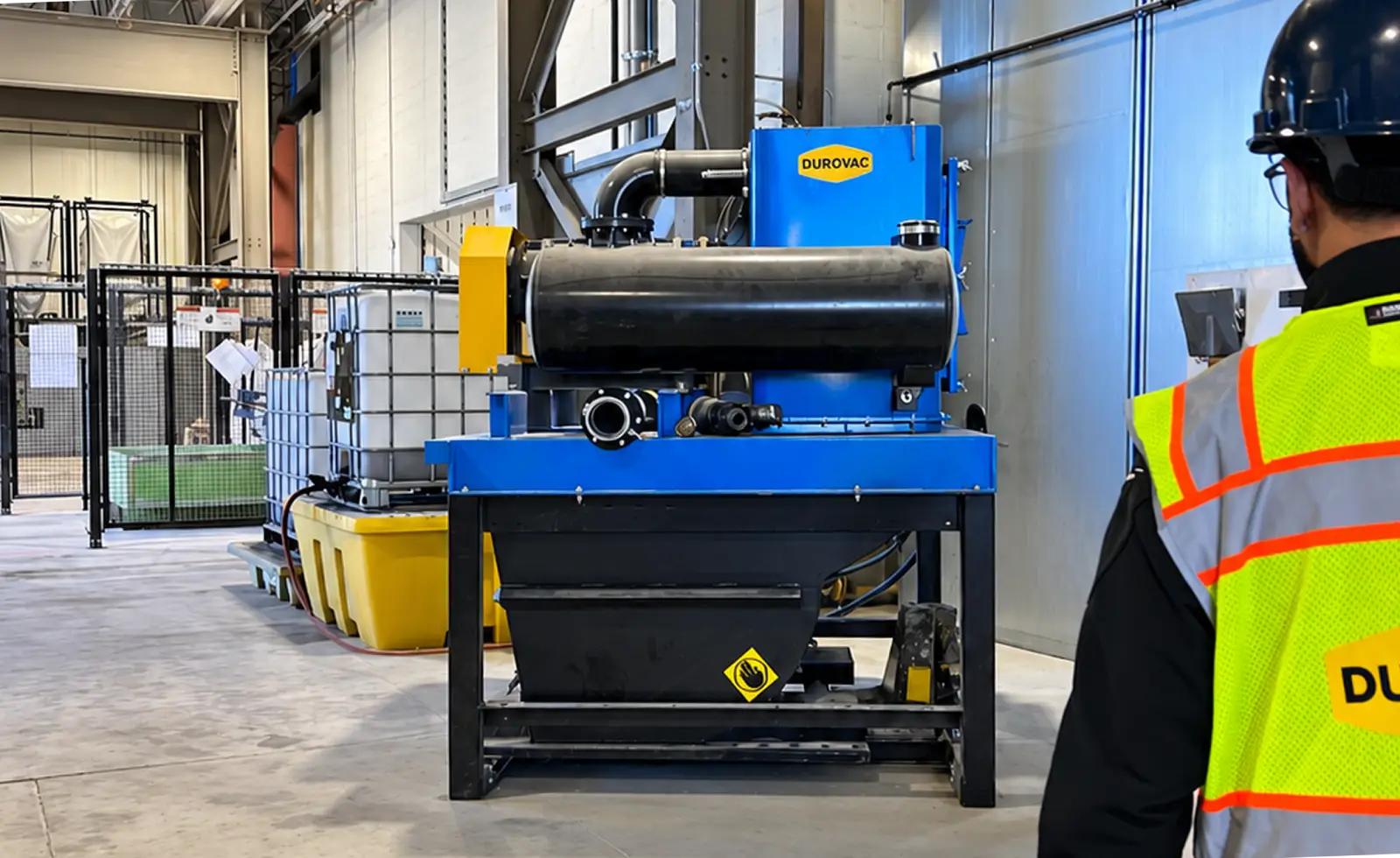
The first half of startup day involves verifying the installation and safety infrastructure, while the latter half is all about user and maintenance training.
A typical startup day begins with any safety orientation and training required for our visit. Our reps will spend the early morning getting familiar with the dos and don'ts of your site so we can complete the installation safely.
The rest of the morning is spent repeating the tests we performed at our shop — a necessary step to verify the vacuum’s performance in your plant environment. We check the power, tubing, and safety devices to ensure they are all properly connected to the facility’s infrastructure, and we confirm the site has been prepared correctly.
Then we get into the FAT. We check oil pump levels, motor rotation, vacuum performance and airflow, and every individual safety sensor. Every power source, safety parameter, and operational parameter needs to be checked before we ever hook up a hose and run the vacuum.
Once the systems check is complete, we start operating the vacuum system in its new environment. That means hooking it up to a hose, finding the nearest drop point, and running material through the unit. We’ll run just enough material to verify the vacuum is working as planned and as promised. Then we’ll shut down the unit to check the discharge to make sure everything in between — the vacuum, hose, and tools — are properly sealed and functioning. This step usually takes about an hour.
If everything checks out in the operation step, we move on to training the workers who will be using the vacuum. Since the systems are easy to operate, we tend to step back and shadow the users while they run the unit. It’s important to have a minimum of three users available so they can get hands-on training with our experienced technician.
After about an hour of user training, we’ll have another hour and a half of maintenance training. The staff will learn how to change filters and run through the failsafe parameters we checked earlier in the day. We’ll explain how to read the sight glass and check the level probe, motor rotation, and pump oil levels. These steps are all covered in the manual for your unit, but it’s helpful for your team to learn everything firsthand.