

If you work in manufacturing, it’s safe to say you’re dealing with messes and material spills on a regular basis. You know your plant needs better ways to keep things tidy, but how do you know which industrial vacuum system will make the biggest difference in your day-to-day operations?
It’s a big decision. We’ll make things simple and highlight the areas where DuroVac vacuum systems excel, both from a practical and cost-efficiency standpoint.
When you’re using an industrial vacuum, the only component you should be replacing is the filter. Everything else is built to last the lifespan of the vac. Even with filters, we don’t like to think of them as disposable — they should last as long as possible to give you the best ROI. That’s why we often hear feedback that our filters last several years.
Another common piece of feedback is that workers on the shop floor love using our vacuums. They’re flexible and go with the flow of your process, so you can just pick up a hose and start cleaning when you need to. Compared to manual cleanup methods, which can be physically demanding to use and sometimes cause injuries, using an industrial vac is always straightforward.
A reliable industrial vacuum needs to fit the material, application and plant. We look at things like airflow, filtration, capacity, discharge and how your team will use the system before recommending a configuration.
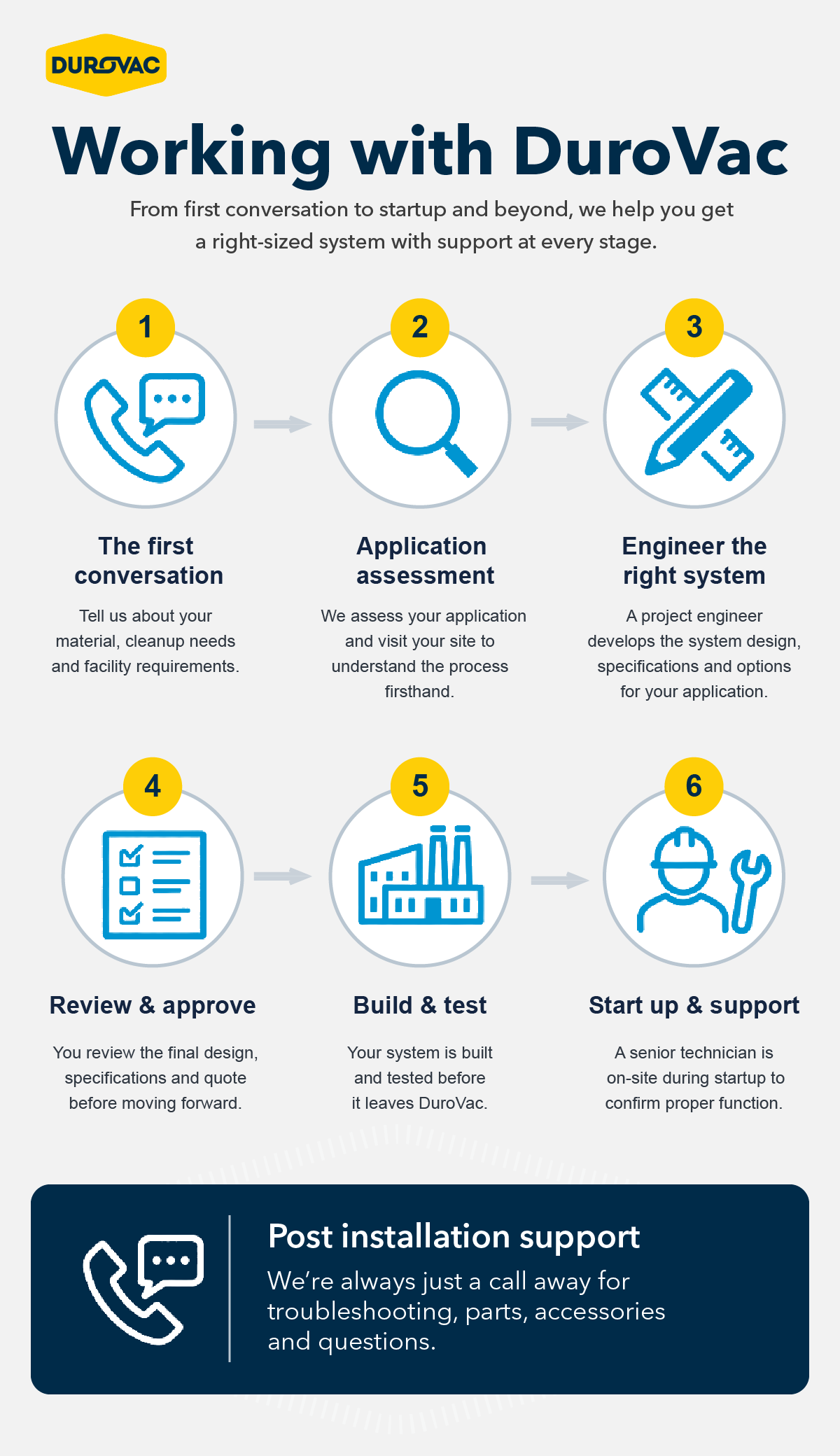
From there, we assess the application, engineer the system, review the final design and quote with you, then build and test it before shipment. A senior technician can support startup, check that everything is working properly.
With high-capacity containers, balanced airflow separation and filtration, and super-durable builds, our industrial vacuum systems are engineered with demanding manufacturing environments in mind. Maintenance is designed to be quick and easy, so you can focus on cleaning up and getting production back on track.
An industrial vacuum system is an investment that starts to pay off within the first year of purchasing. By owning your system, you can reduce or eliminate the need for expensive vac trucks and get everything done in your own timeline. It’s also faster than any other cleaning method, whether you’re spot cleaning or handling heavy spills, which can save you a lot of downtime.
Is the warranty policy written in plain English? Does it show clear, predictable costs and timelines? Warranties should put the customer first and show confidence in the system’s durability. We stand by our vacuums, because we’ve seen them stand the test of time in all kinds of manufacturing scenarios.
No one has time to sit around waiting for a quote when work needs to get done and decisions need to be made. We typically send accurate quotes within hours of your request, and if you have changes to make or questions to ask, we’ll get back to you promptly.
We don’t just sell you a vacuum and forget about it. We’ll help you with the installation and integration process, so operators can quickly learn how the vac fits into their workflow. Our sales reps and technical support teams also do onsite visits, so whether you’re configuring a vacuum or need help troubleshooting an issue, we can see your process in action and you can ask us any questions face-to-face.
Industrial messes come with a host of safety hazards, and we know regulatory compliance is always top of mind for plant leaders. We’re always ready to discuss features for OSHA compliance, like HEPA filtration for silica dust collection, and NFPA compliance options like explosion protection and prevention. This helps keep your plant and workers safe without sacrificing performance or ROI.
Yes, our systems can handle everything from fine dust to aggregate metal, but the right industrial vac will depend on your specific material. We’ll ask a lot of questions about your plant setup, your compliance needs, how big your spills get, and how many operators will be cleaning, all in the service of configuring a vacuum that excels in your unique manufacturing environment.
To get an idea of what type of industrial vacuum you need for your plant, use the Vac Selector Tool. It’s like a pop quiz: answer five quick questions (don’t worry, no math), and you’ll get a recommendation. You can choose to request a quote for that system at the end, in which case you can count on our prompt response. Try it out.
